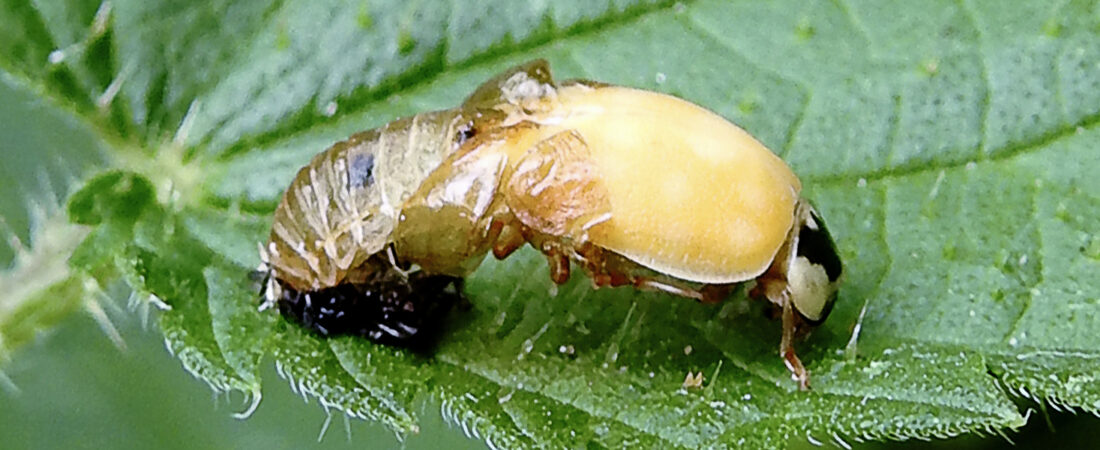
After discovering a harlequin ladybird pupa clinging to a nettle leaf, I became slightly obsessed. Every half an hour or so I’d wander back to check on it, hoping to catch the magical moment when the adult emerged.
Nothing.
For three days!
Then, on a warm and breezy July morning, just before 8am, it finally happened. I looked again and the hatch was already open!
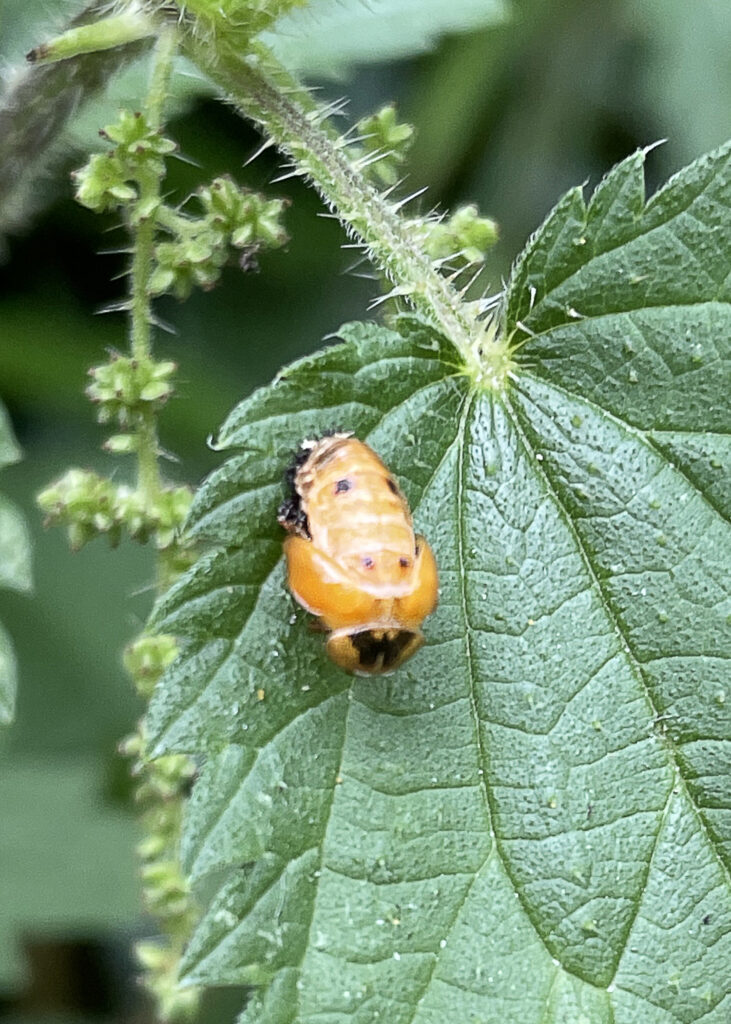
With shaking hands and a heart full of excitement, I started snapping photos. I couldn’t believe how quickly things were progressing. Just a couple of minutes later, the little one was already halfway out! 😲
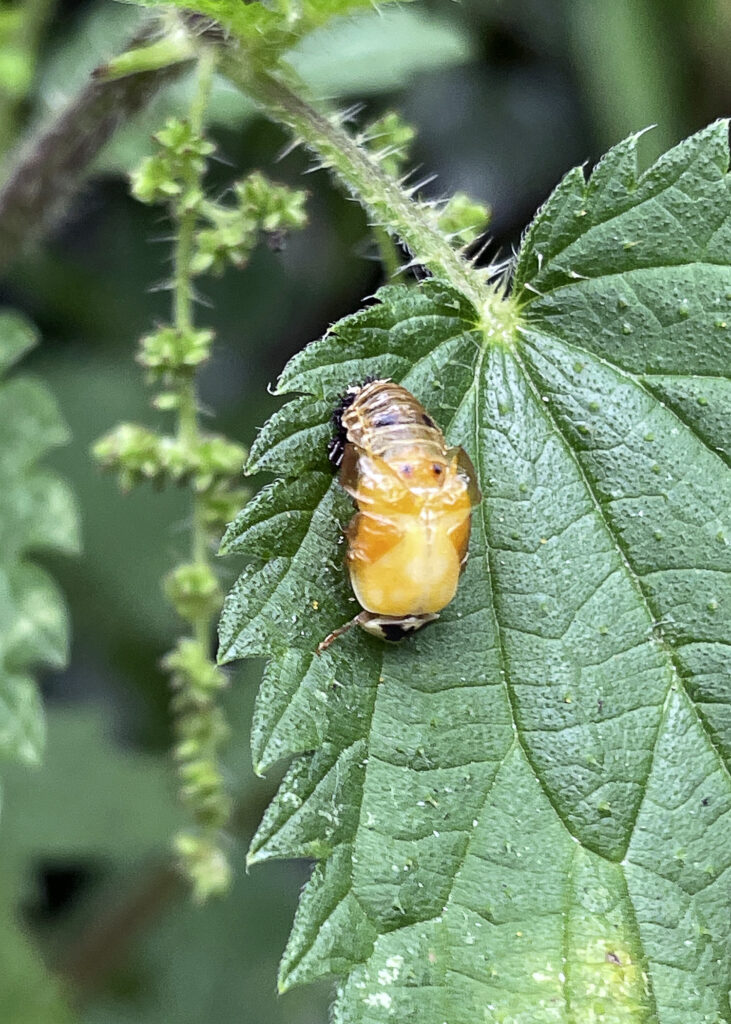
With plenty of determination (and a little help from her front legs), she clambered free, leaving behind an empty husk – the ghostly shell of the alien-like larva she had been only a few days before.
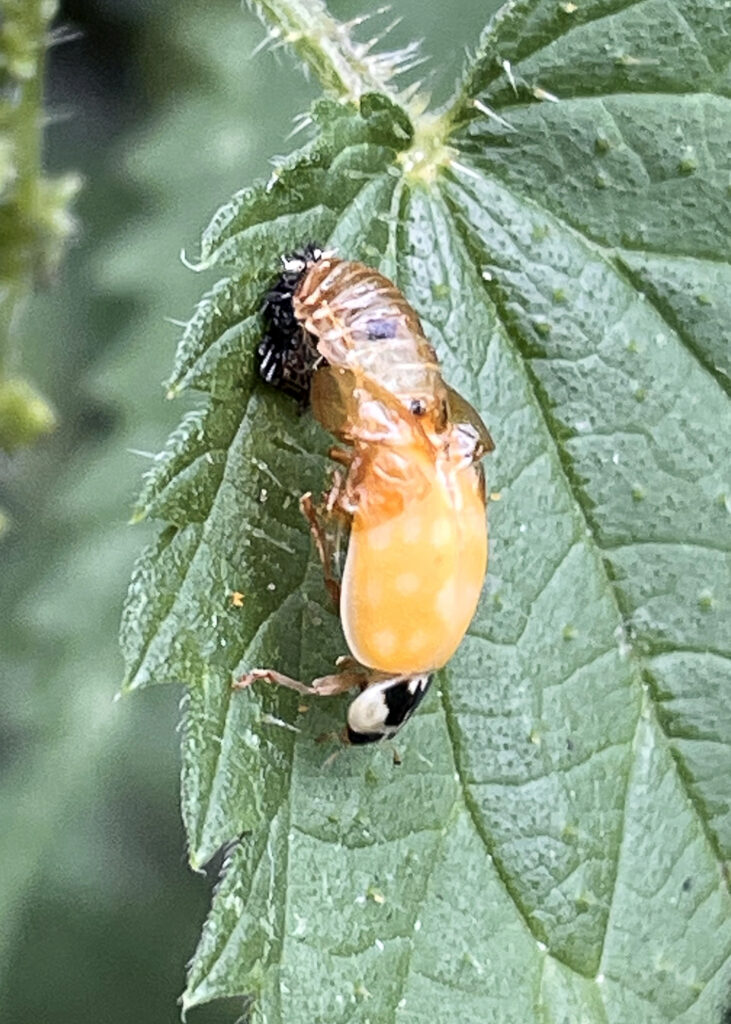
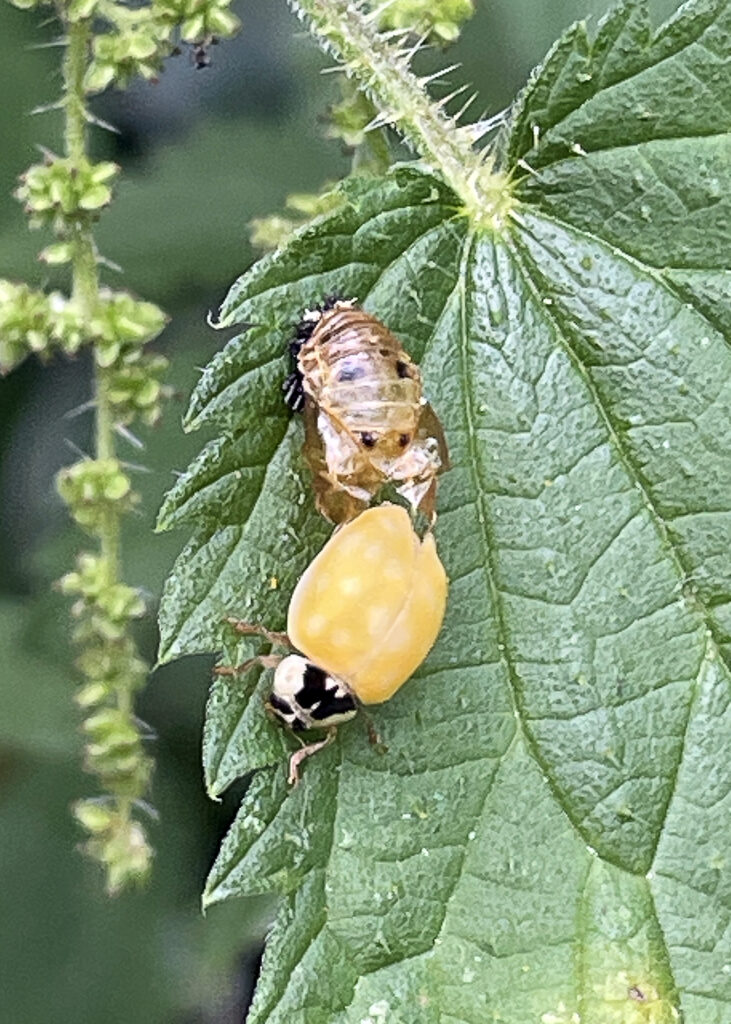
And finally… success!
The freshly emerged ladybird looked nothing like the familiar red, spotted beetle we’re all used to seeing. Instead, it resembled a tiny pale yellow gooseberry balanced on six legs, with a wonderfully soft, glossy appearance.
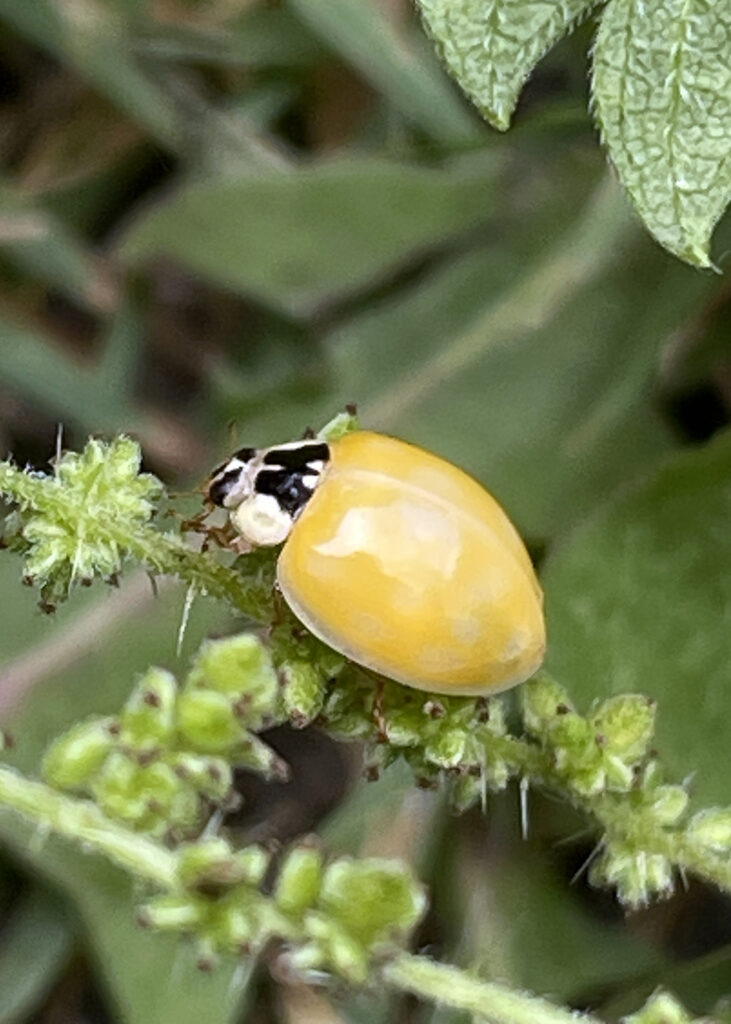
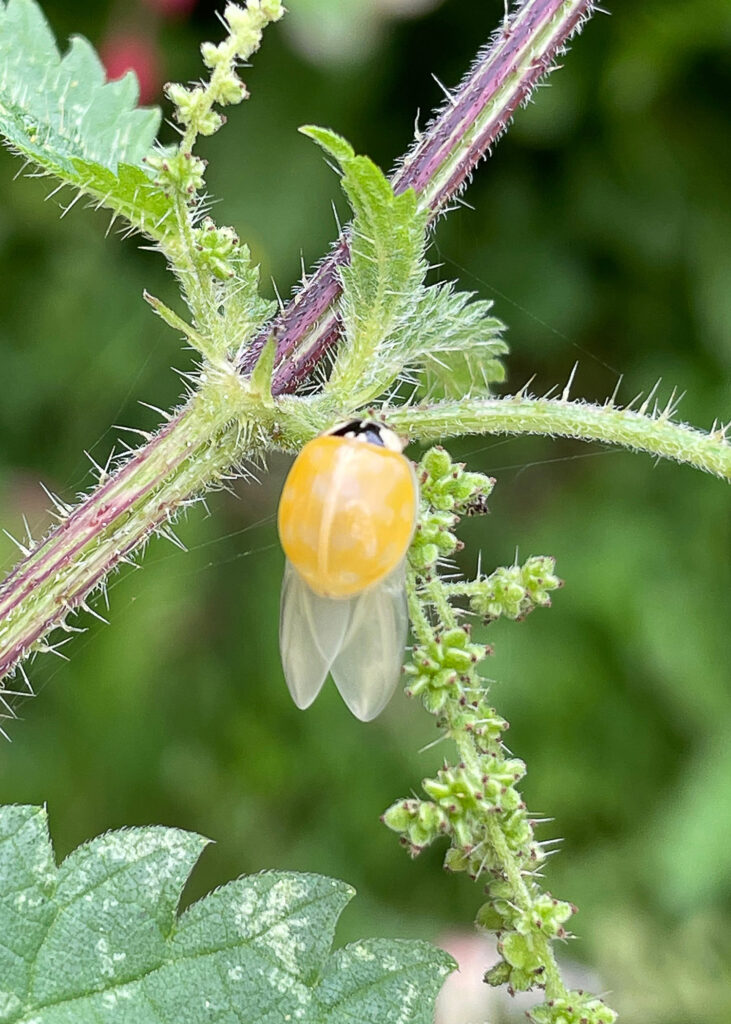
Once free, it paused while another remarkable transformation began. Hidden beneath its wing cases were delicate flight wings, folded like intricate origami. These slowly unfurled until they were much larger than the body itself. For a while, the ladybird simply stood there with its wings fully extended, allowing them to dry before carefully folding them away beneath the wing cases.
The colours were equally unexpected. Newly emerged harlequin ladybirds are usually pale yellow, cream or orange because the pigments haven’t fully developed yet. Their familiar spots don’t appear immediately either. Over the next few hours, I watched, camera in hand, as the colour deepened and the first tiny black spots gradually appeared, as though someone had started painting the finishing touches.
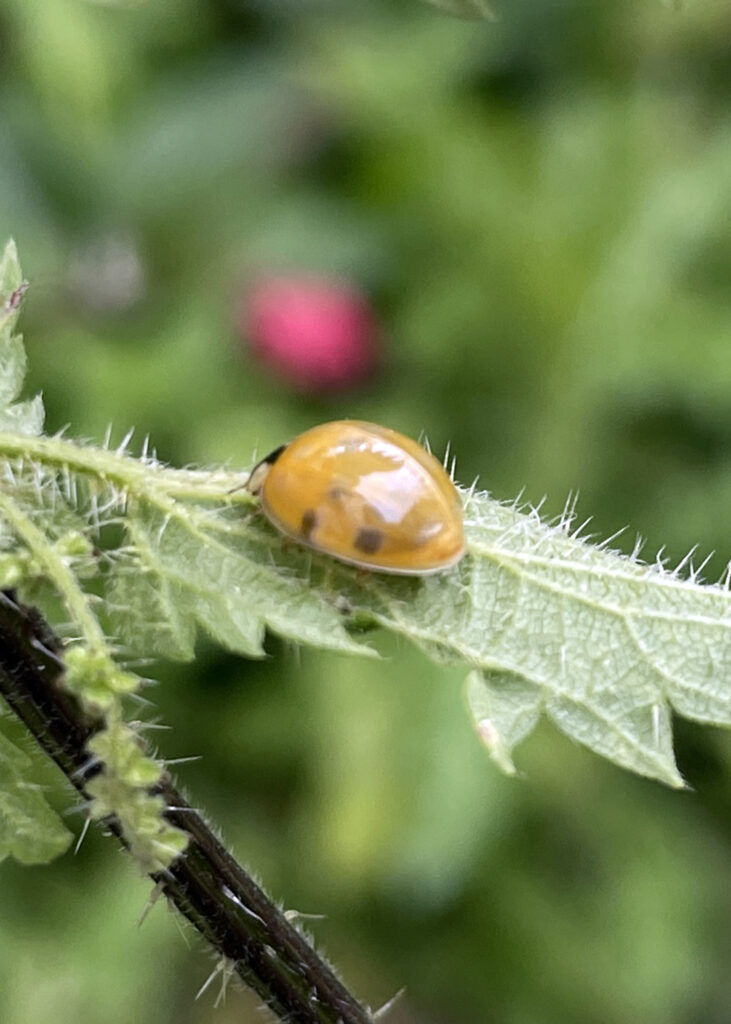
The hard outer shell, known as the exoskeleton, is also soft when the ladybird first emerges. During those first few hours, it slowly hardens in a process called sclerotisation, giving the insect the tough armour it will wear for the rest of its adult life.
And then, as if to celebrate becoming a proper ladybird, she wandered off to inspect an aphid buffet. Freshly transformed, newly spotted, and immediately presented with a leaf full of tiny snacks.
Not a bad first day!
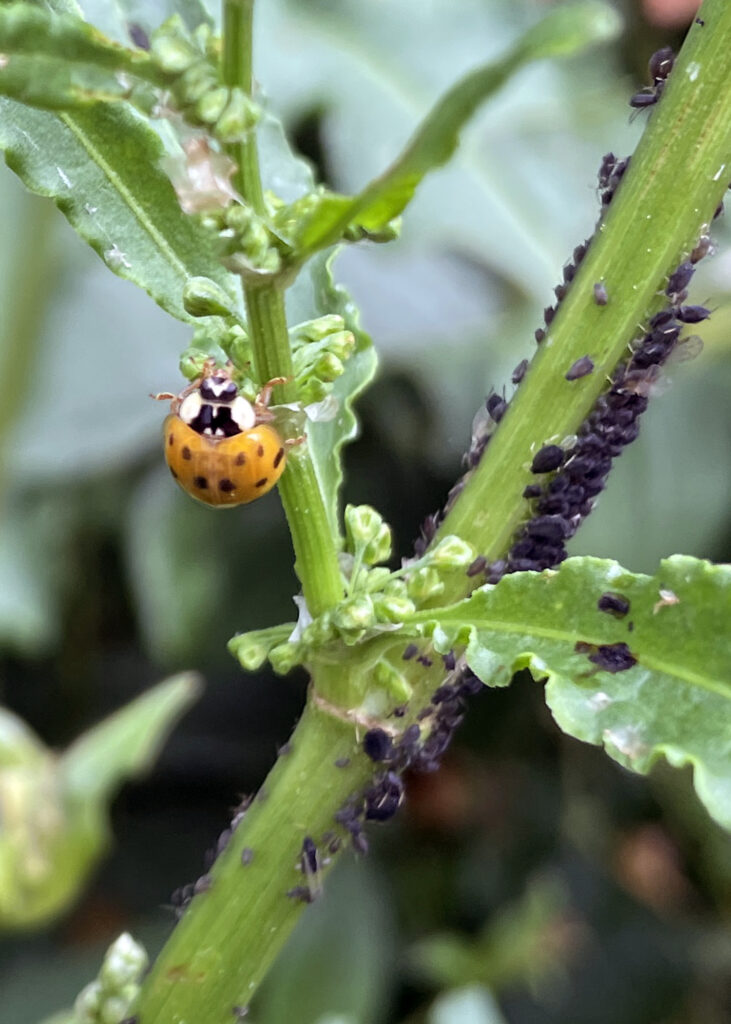
Watching this tiny creature emerge from its pupa was nothing short of breathtaking. The wait was more than worth it!
A lot of patience, determination and a sprinkle of luck make my new recipe for witnessing nature’s magic. 😉