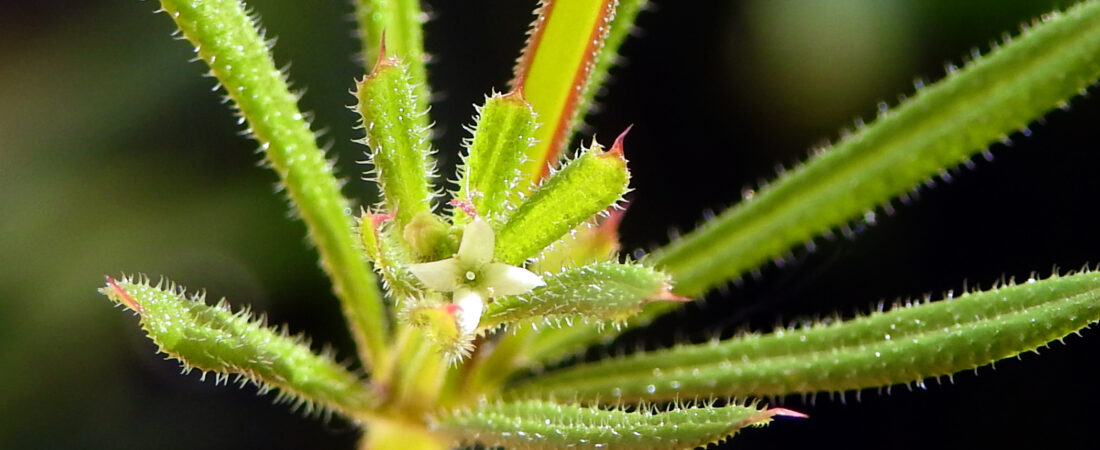
There are certain plants that exist so quietly in the garden that you stop seeing them altogether. For me, Galium aparine — commonly called cleavers, goosegrass, catchweed bedstraw, or the deeply dignified “sticky willy” – was one of them.
But today, I noticed it.
First, the flowers: tiny. Almost impossibly tiny. Little white stars tucked among the tangled stems like they’re trying not to attract attention.
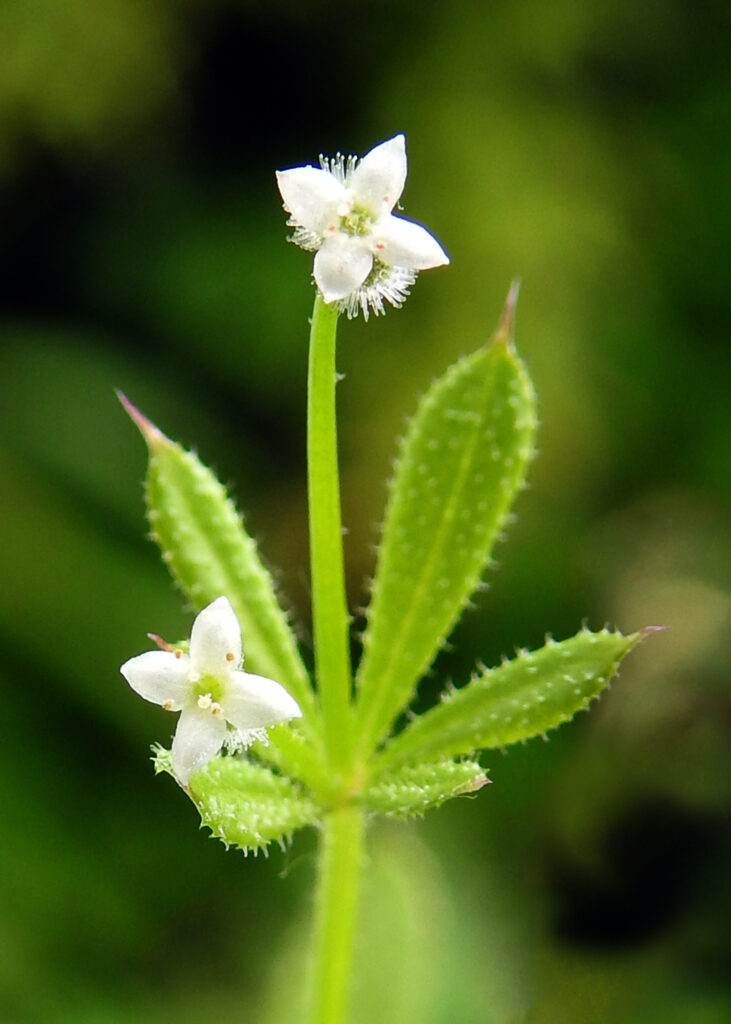
Naturally, this immediately raised an important scientific question:
Who exactly is pollinating these microscopic introverts?
So I crouched down for a closer look, took a few photos, and that was when the plant became genuinely fascinating.
Looking closer, I noticed the entire thing is covered in tiny hooked spikes. The stems, the leaves, even the seeds – all armed with microscopic hooks designed to cling to absolutely anything passing by. Fur, feathers, trousers, shoelaces… nothing is safe.
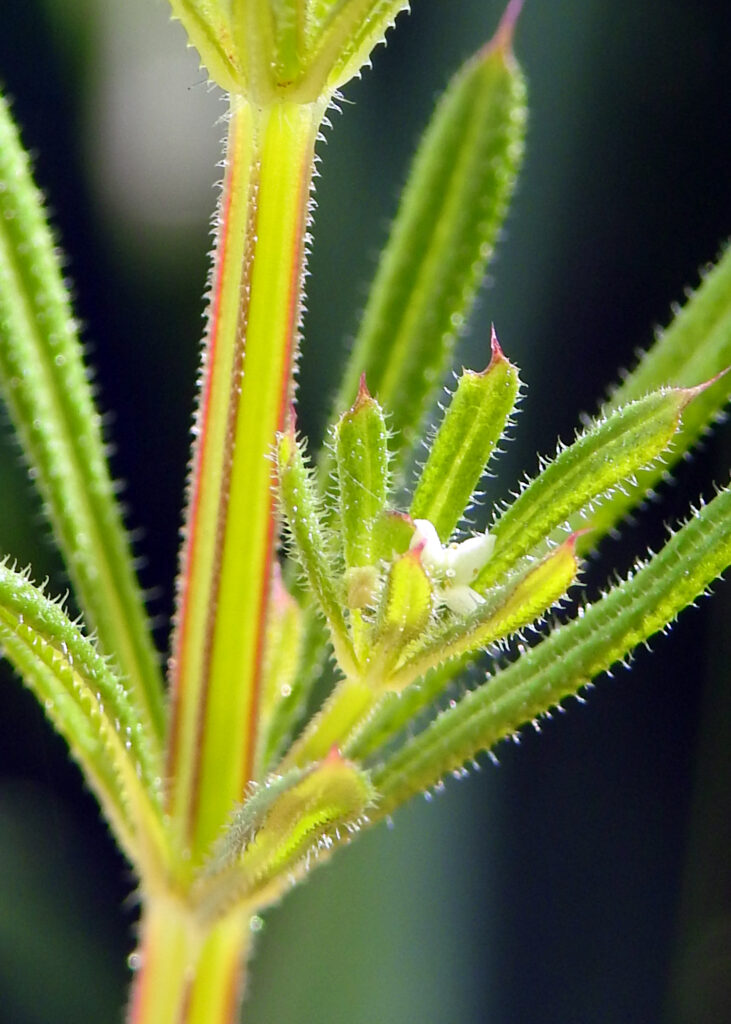
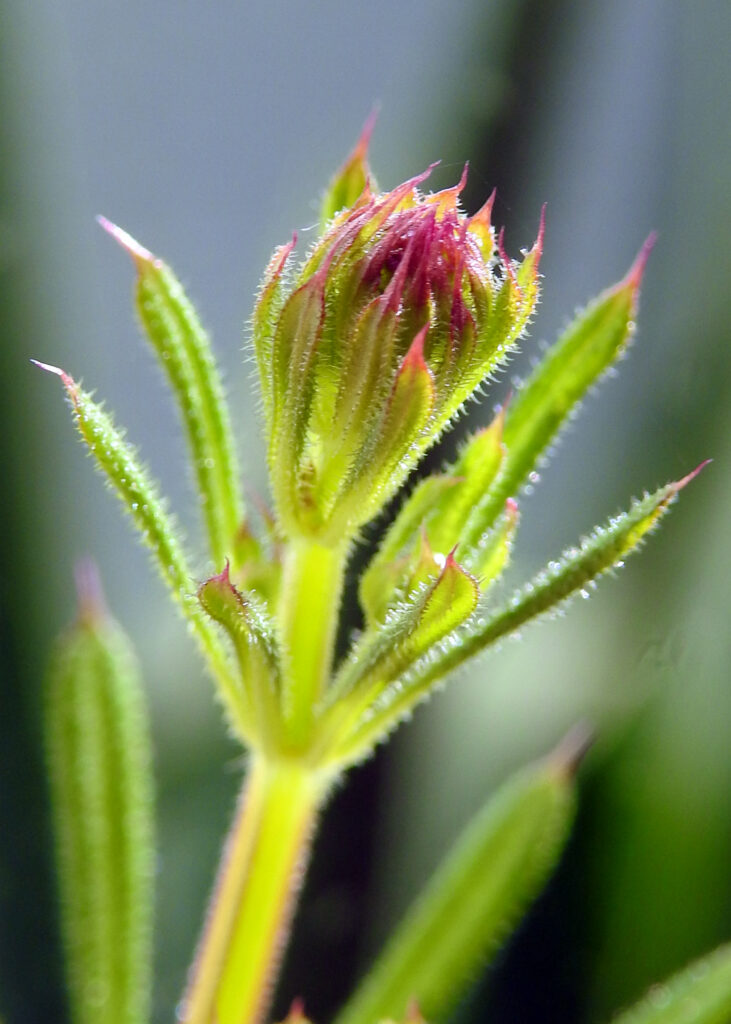
It turns out this is the plant’s entire strategy in life. Rather than confidently growing upright (like other plants), cleavers simply throws itself at its neighbours and clings on for dear life using these tiny hooks for support, almost like a botanical grappling-hook system. Then, once the little seeds (or, as I now affectionately call them: “the hairy balls”) mature, they hitchhike away on unsuspecting animals and humans to start the process elsewhere.
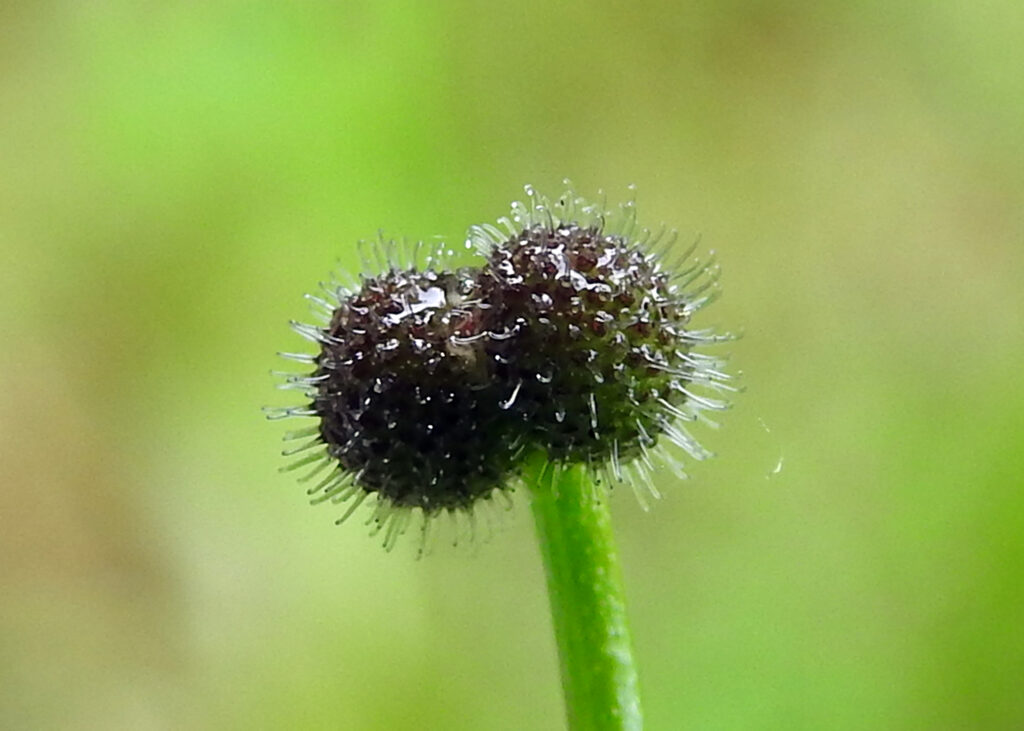
Apparently, this is also why the plant earned names like “sticky willy” and “catchweed.” Once you’ve walked through a patch of it, the relationship becomes very one-sided very quickly.
Oddly enough, despite behaving like an invasive cuddle enthusiast, people have found uses for cleavers for centuries. It belongs to the same plant family as coffee, and its seeds were once roasted as a coffee substitute – proof that humans will look at almost anything and eventually decide to brew it.
Young shoots are edible too, although I suspect the texture might require a certain level of optimism. It’s one of those plants where foraging books say “edible!” and your brain immediately replies, “…but at what emotional cost?”
Cleavers belongs to the bedstraw family. Historically, dried plants from this group were used as bedding because the tangled stems formed springy layers. Some species were even thought to repel fleas.
Traditionally, cleavers was associated with the lymphatic system and used in teas or tonics. Herbalists often describe it as a “cooling” spring herb.
The more I read, the more I realised this was one of those plants hiding in plain sight: overlooked simply because it is common.
And honestly, that might be my favourite kind of discovery.