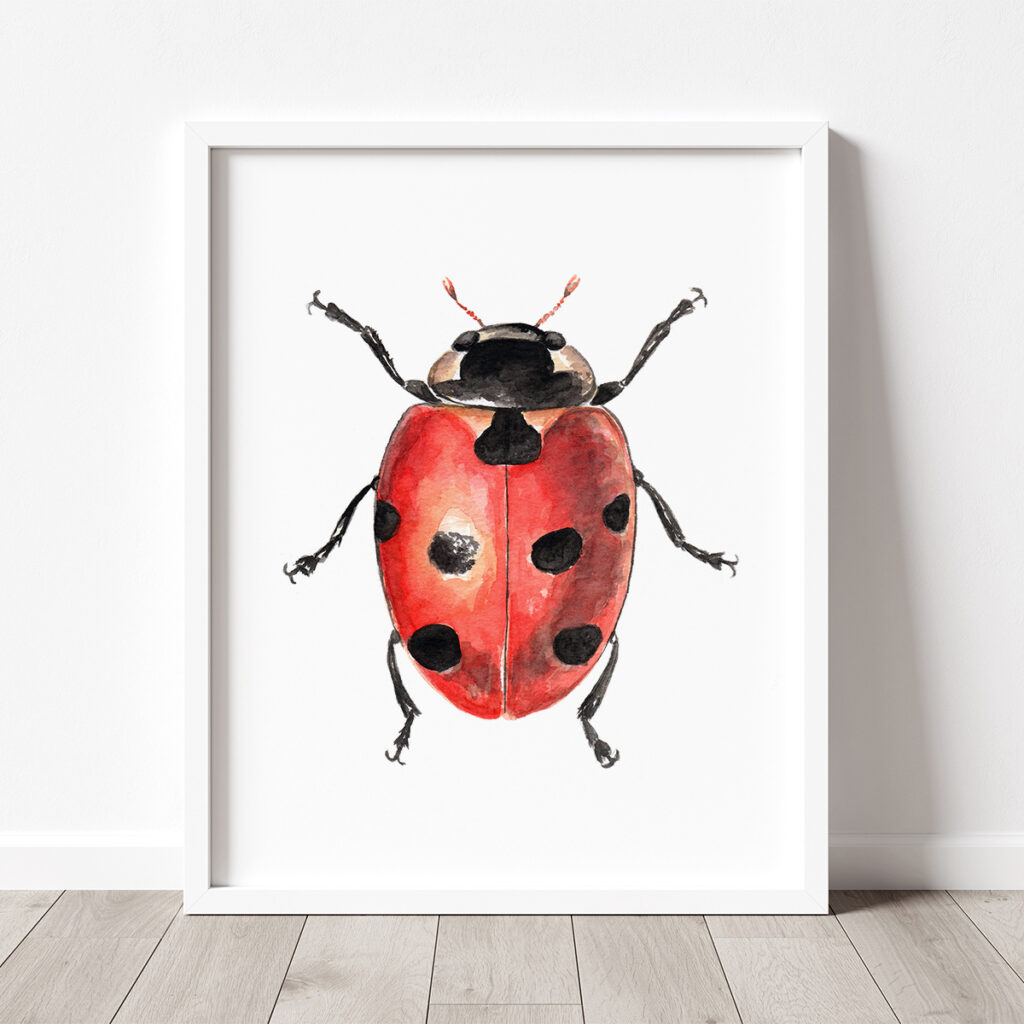
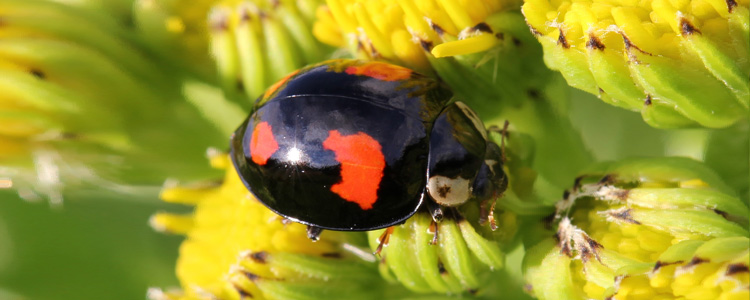
Most insects don’t seem particularly concerned about preserving their dignity. This harlequin ladybird (Harmonia axyridis) certainly wasn’t.
While wandering through the garden with a camera, I spotted this striking little beetle and was immediately intrigued by its unusual appearance. Unlike the classic red ladybird of children’s books, this one wore a glossy black coat decorated with four bright red spots. As if that wasn’t eye-catching enough, it then proceeded to partially lift its wing cases, revealing a glimpse of its hidden “undercarriage” in what can only be described as a miniature wardrobe malfunction.
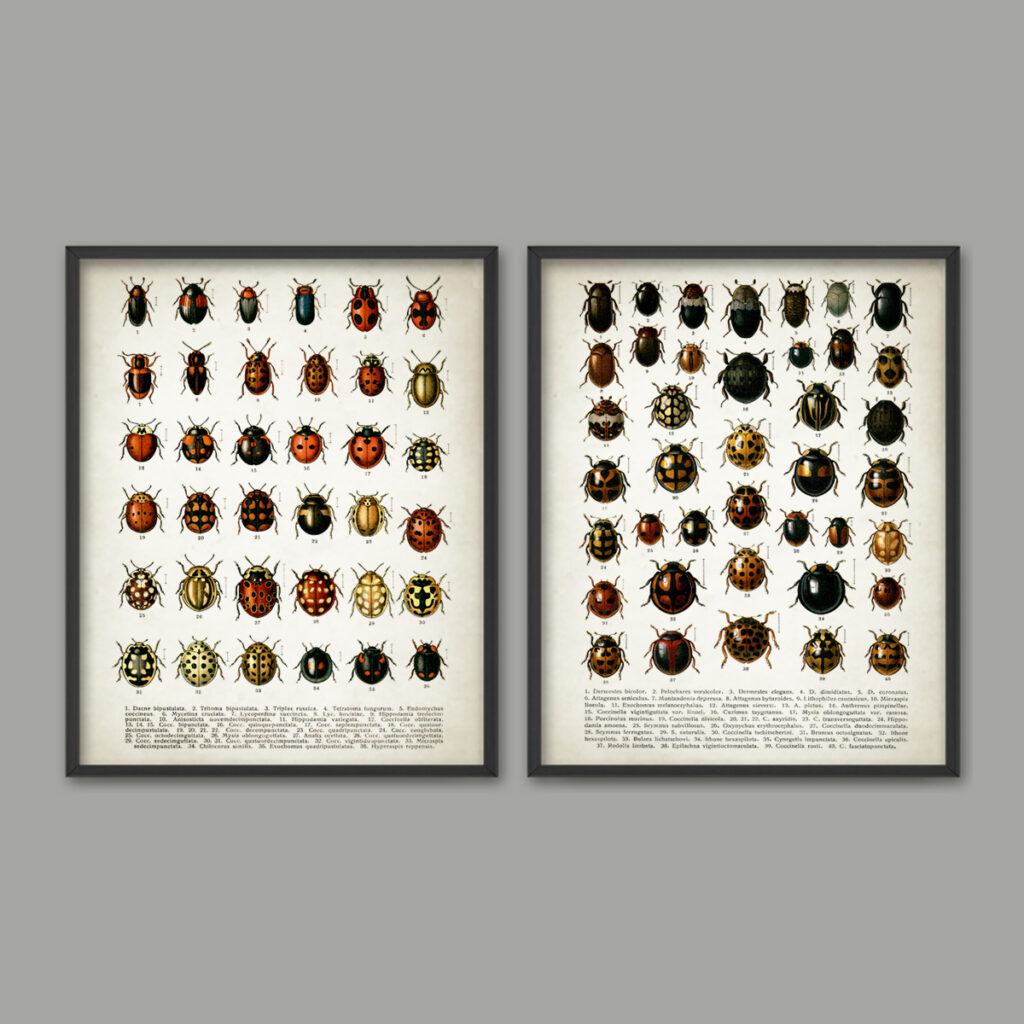
The ladybird in this video is a colour form known as spectabilis, one of many remarkable variations of the harlequin ladybird. In fact, harlequins are among the most variable beetles in the world, with hundreds of different colour patterns recorded. Some are orange, some are red, some are almost entirely black, and all seem determined to keep entomologists on their toes.
A Beetle in Two Layers
What looked like a tiny act of indecency was actually a useful opportunity to see how a ladybird is put together.
The hard, shiny outer shells are called elytra. These modified forewings act as protective covers, shielding the delicate flying wings folded beneath. When a ladybird wants to take off, the elytra lift upwards and the transparent hind wings unfold from underneath like an intricate piece of origami.
Not Quite a Local
The harlequin ladybird is native to eastern Asia but has spread across much of Europe and North America. It was originally introduced in several countries as a natural form of pest control because it has a voracious appetite for aphids.
Unfortunately, it proved rather too successful. Harlequin ladybirds are larger than many native species, reproduce rapidly, and are formidable predators. They compete with native ladybirds for food and sometimes even eat the eggs and larvae of other ladybird species. As a result, they are now considered an invasive species in the UK.
It is a slightly awkward situation. They are beautiful, fascinating insects, but also ecological troublemakers.
Tiny Chemical Warfare Experts
Ladybirds have a surprisingly effective defence system. When threatened, they can release droplets of yellow fluid from their leg joints in a process known as reflex bleeding. This fluid contains chemicals that taste unpleasant to predators and serves as a warning that the insect is not worth eating. Harlequin ladybirds take this a step further. Their blood contains a compound called harmonine, a powerful antimicrobial substance that helps protect them against disease-causing microbes.
For such a cheerful-looking insect, it is carrying a surprisingly sophisticated chemical arsenal.
A Loveliness of Ladybirds
One of my favourite discoveries while researching this species was learning that a group of ladybirds can be called a loveliness. Honestly, if any insect deserves such a collective noun, it is the ladybird. Brightly coloured, harmless to humans, and welcomed by generations of gardeners, they have long been regarded as symbols of good fortune.
In Britain and elsewhere in Europe, they were often considered lucky creatures that should never be harmed. One old belief held that if a ladybird landed on you, it was bringing good fortune. In some traditions, the direction in which it flew was thought to indicate where luck, love, or good news would arrive from. Considering their usefulness in gardens, perhaps their good reputation was well earned.
A tiny beetle no larger than a fingernail turns out to be an accomplished flyer, a chemical warfare specialist, an invasive predator, a subject of folklore, and a member of what might be the most charmingly named gathering in the animal kingdom.
A loveliness, indeed.
Featured photo credit: Harlequin Lady beetle by Stu’s Images, licence