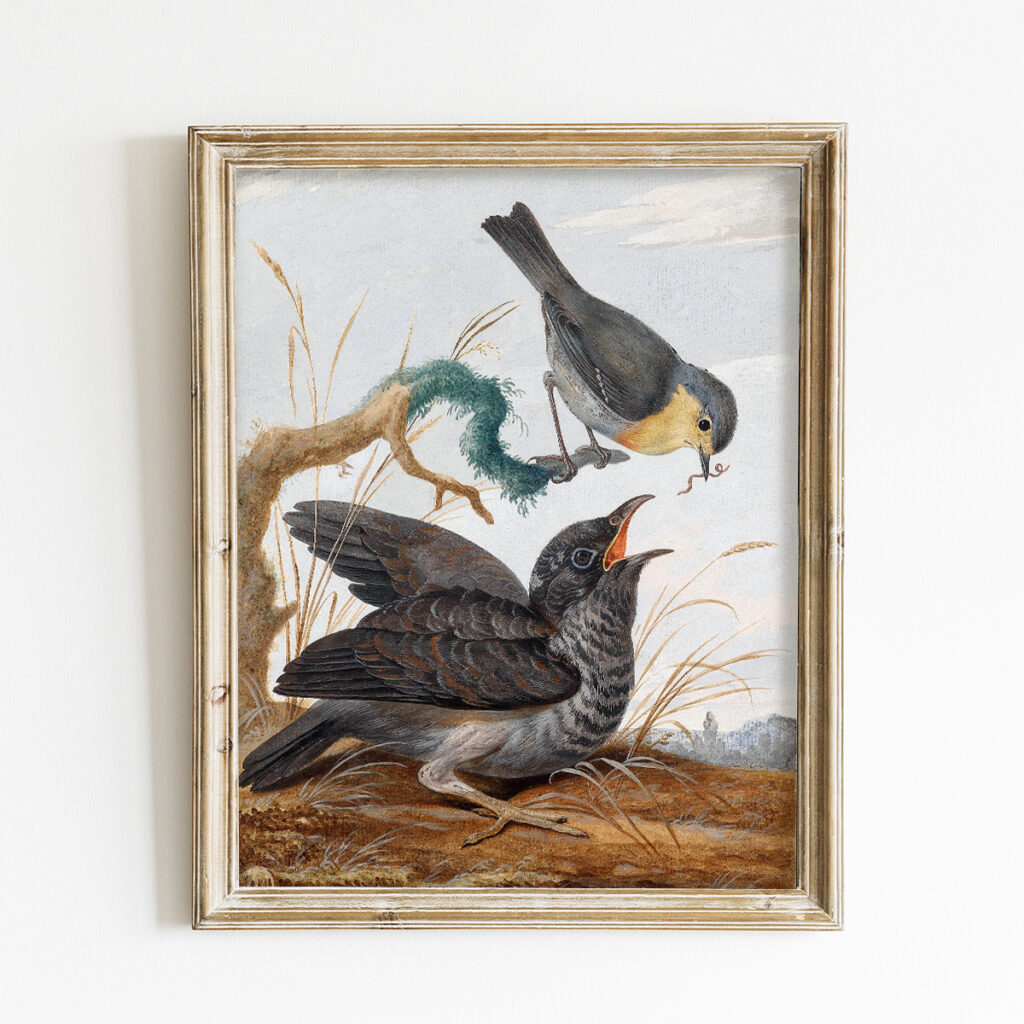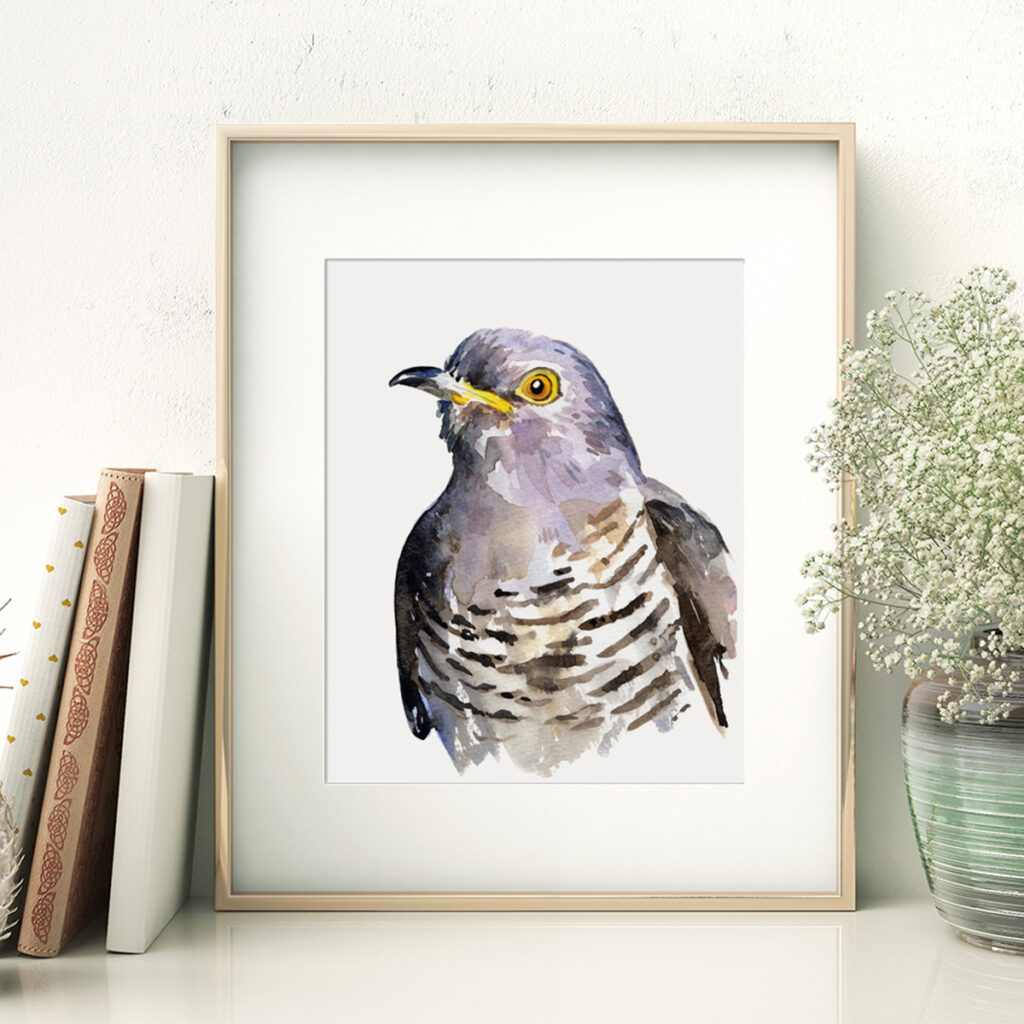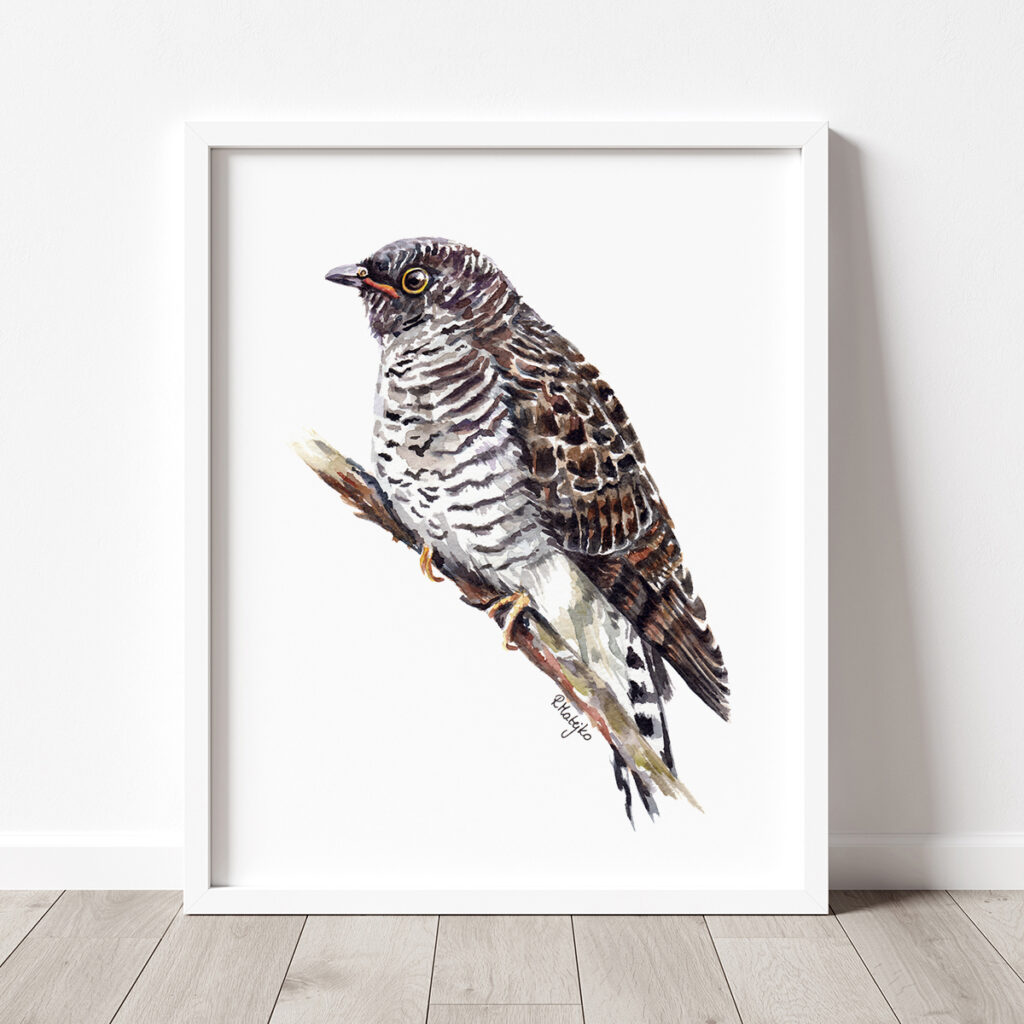
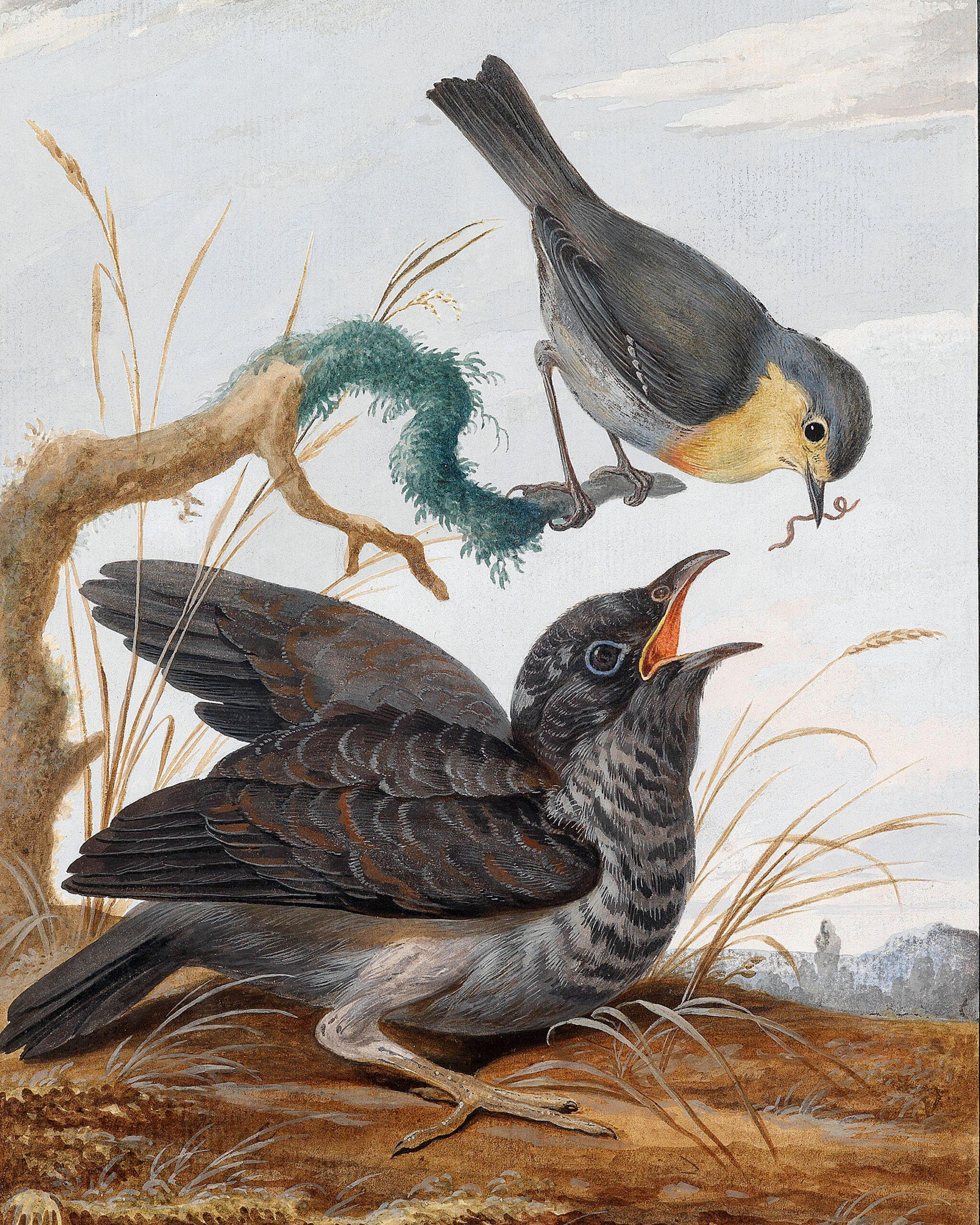
I have recently come across this fascinating artwork – ‘A cuckoo being fed by a robin’ by Johann Christian von Mannlich and it’s prompted me to read up about this intriguing bird. Today I’d like to share with you some interesting facts about (possibly) the worst parents in the avian world!
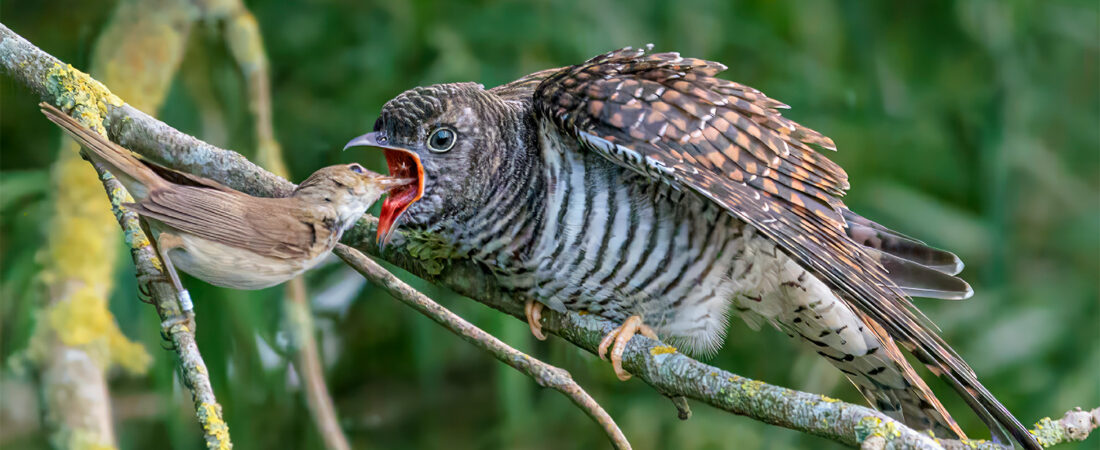
One of the most studied aspects of cuckoo biology is brood parasitism. In species like the Common Cuckoo, females lay their eggs in the nests of other birds — often targeting specific host species such as the Reed Warbler. And it wouldn’t be very surprising if it wasn’t for the fact that the chick is several times larger than the parent! A female cuckoo, seemingly guilt-free, can lay an egg in a host nest in as little as 10 seconds and her “parenting” job ends there! Her egg often has a shorter incubation period—around 11–12 days—compared to the host’s eggs, giving the cuckoo chick a developmental advantage.
Once hatched, the chick exhibits a fascinating innate behaviour: it instinctively pushes other eggs or chicks out of the nest using a specialised hollow in its back. This behaviour occurs within the first few days of life and ensures that it receives all the food brought by the foster parents. Despite being unrelated, the host birds respond to the chick’s exaggerated begging calls and bright gape (the colourful inside of its mouth), which are highly effective at triggering feeding responses.
And what’s even more remarkable is that cuckoos have evolved into different “host races” (known as gentes), each specialising in mimicking the eggs of a particular host species. This mimicry is so precise that it involves not just colour, but also pattern and even shell thickness.
From an evolutionary standpoint, cuckoos are a classic example of a coevolutionary “arms race.” Host species continuously evolve better abilities to recognise and reject foreign eggs, while cuckoos evolve increasingly sophisticated mimicry to bypass these defences. This dynamic interaction provides valuable insight into natural selection and adaptation. While their reproductive strategy may seem controversial, cuckoos represent a powerful example of how diverse and complex survival strategies can be in the natural world. Combining behavioural precision, physiological adaptation, and evolutionary innovation, they remain one of the most captivating subjects in ornithology.
Featured photo credit: A warbler feeding a cuckoo chick by Sonja Braue, licence