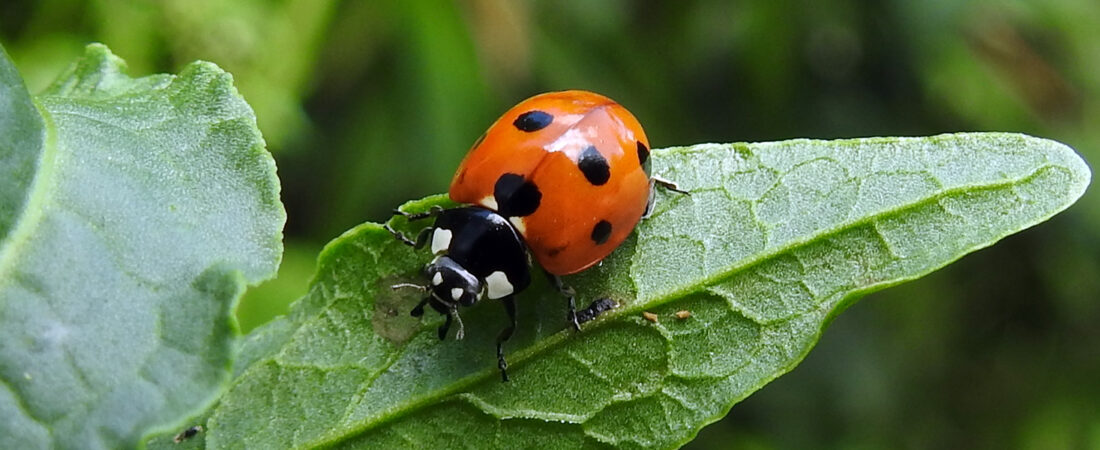
I was just about to trim one of the plants in the garden when something made me stop. The stems were absolutely covered in aphids. Hundreds of them! Normally I’d be tempted to remove the worst of it, but then I noticed a familiar little face. A ladybird. Then another. And another… Within a few minutes I realised I hadn’t stumbled across just one ladybird – I had apparently interrupted the annual Ladybird Convention, conveniently hosted at what can only be described as an all-you-can-eat aphid buffet. The more I looked, the more fascinating it became. There wasn’t just one species. There were several. Even more exciting, I seemed to have found almost every stage of a ladybird’s life cycle all on the same plant.
The Buffet
For aphids, this plant was paradise.
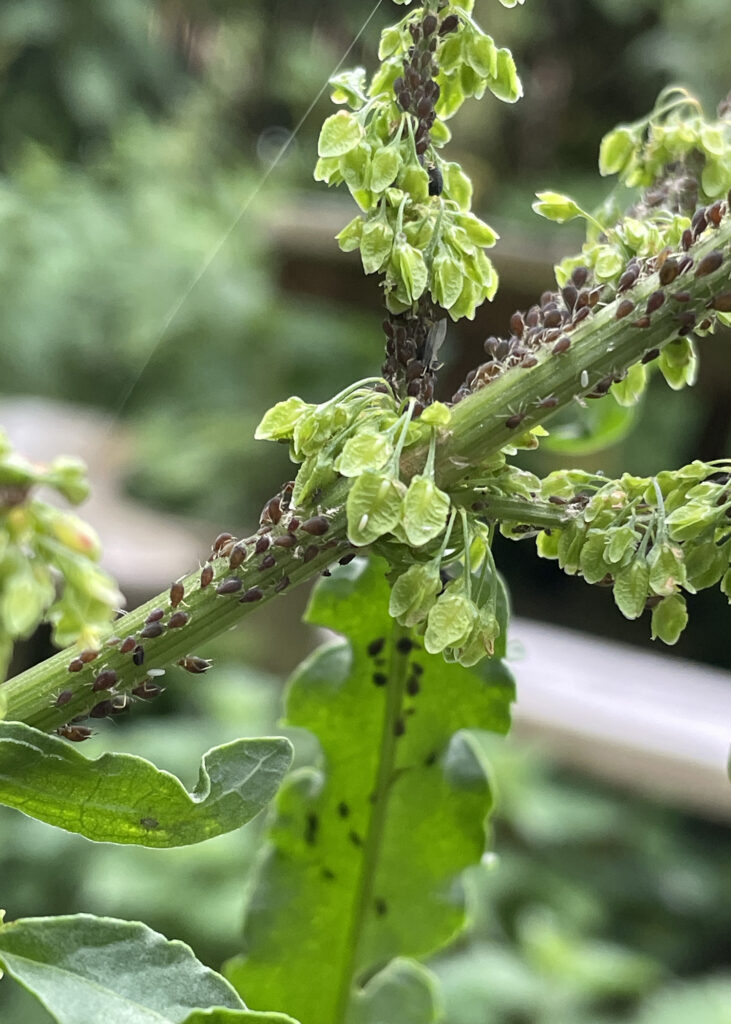
For ladybirds… it was paradise too. Both adult ladybirds and their larvae are voracious predators, capable of eating dozens of aphids every day. What looked like a disaster for the plant had become a feast for one of the garden’s most helpful insects.
Tiny Yellow Treasures
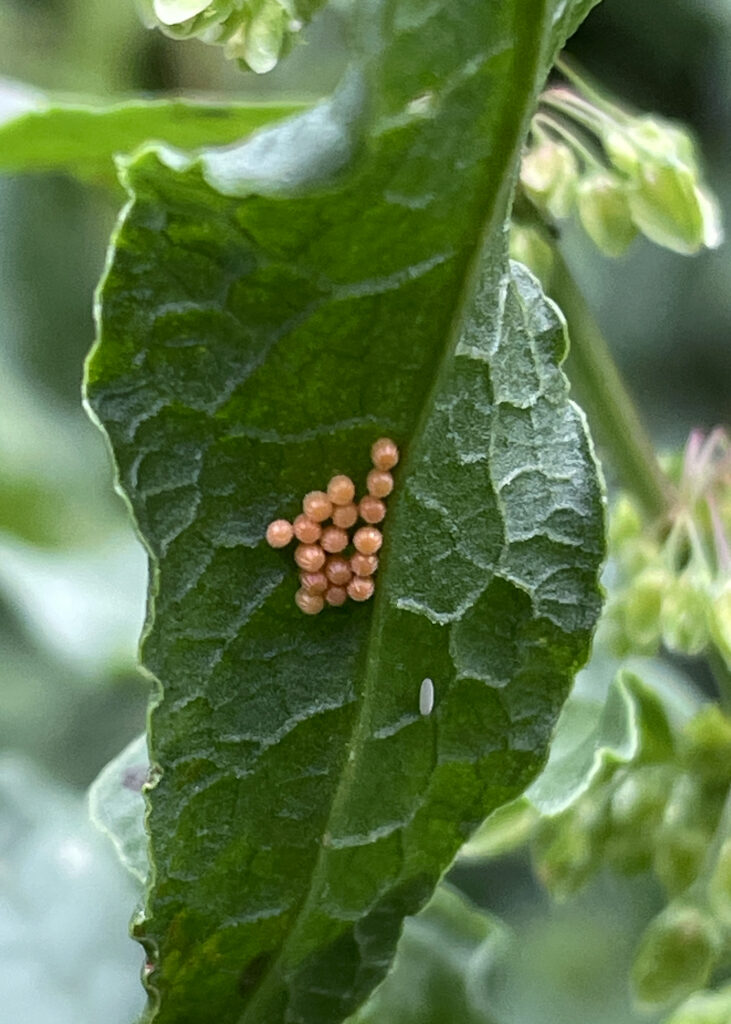
Among the leaves I found neat clusters of tiny yellow eggs. Ladybird eggs are usually laid close to aphid colonies so that when the larvae hatch, breakfast is served immediately. It’s one of nature’s best examples of planning ahead.
The Alien Babies
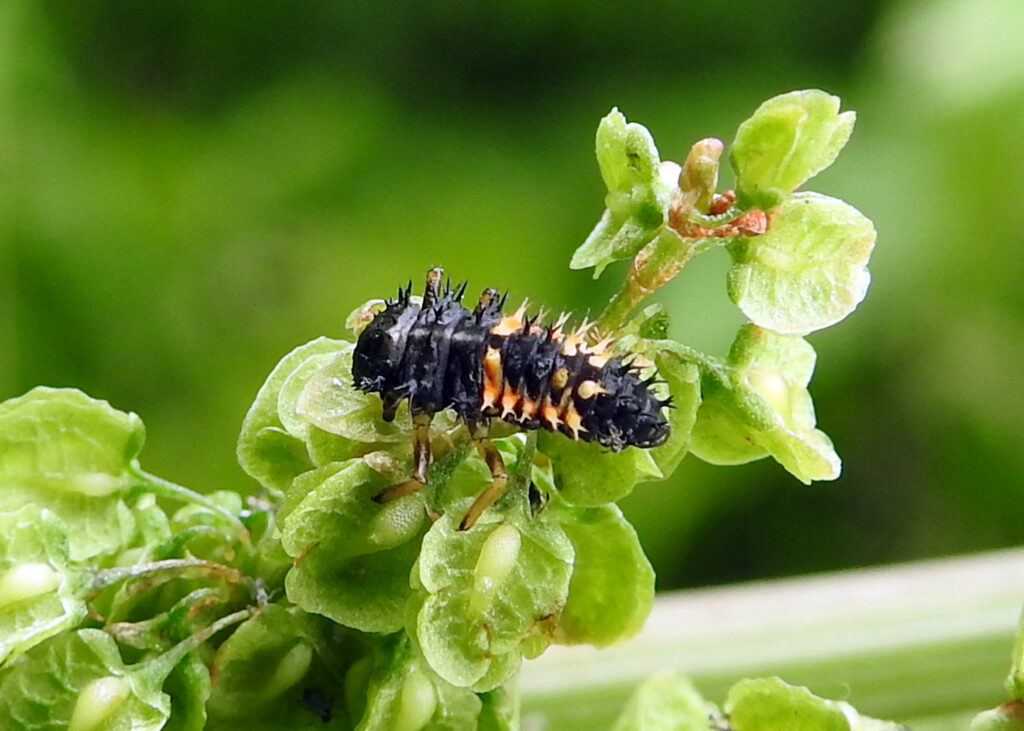
Then I spotted my favourite stage. If you’ve never seen a ladybird larva before, you’d probably never guess what it will become. They’re long, spiky, fast-moving and look more like tiny prehistoric monsters than the adorable beetles we all know. Every time I see one I think they look like little aliens exploring another planet. Despite their fearsome appearance, they’re completely harmless to us – and incredibly efficient aphid hunters.
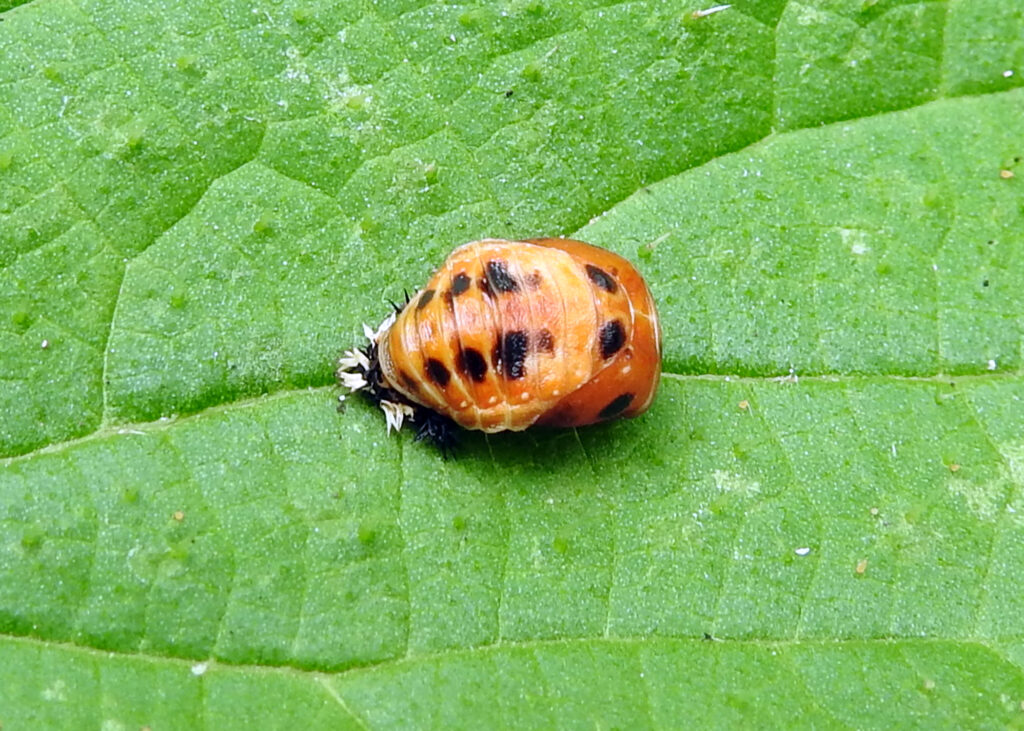
The Mysterious Curled-Up Alien
Nearby was another strange creature. At first glance it looked like one of the larvae had simply curled up for a nap. In reality, it was performing one of the greatest magic tricks in nature. The larva had attached itself to the plant and transformed into a pupa. Hidden inside, its body was being completely reorganised into an adult ladybird. It’s astonishing to think that something so ordinary-looking is quietly rebuilding itself from the inside out.
So Many Ladybirds!
The adult guests at the convention were just as varied.
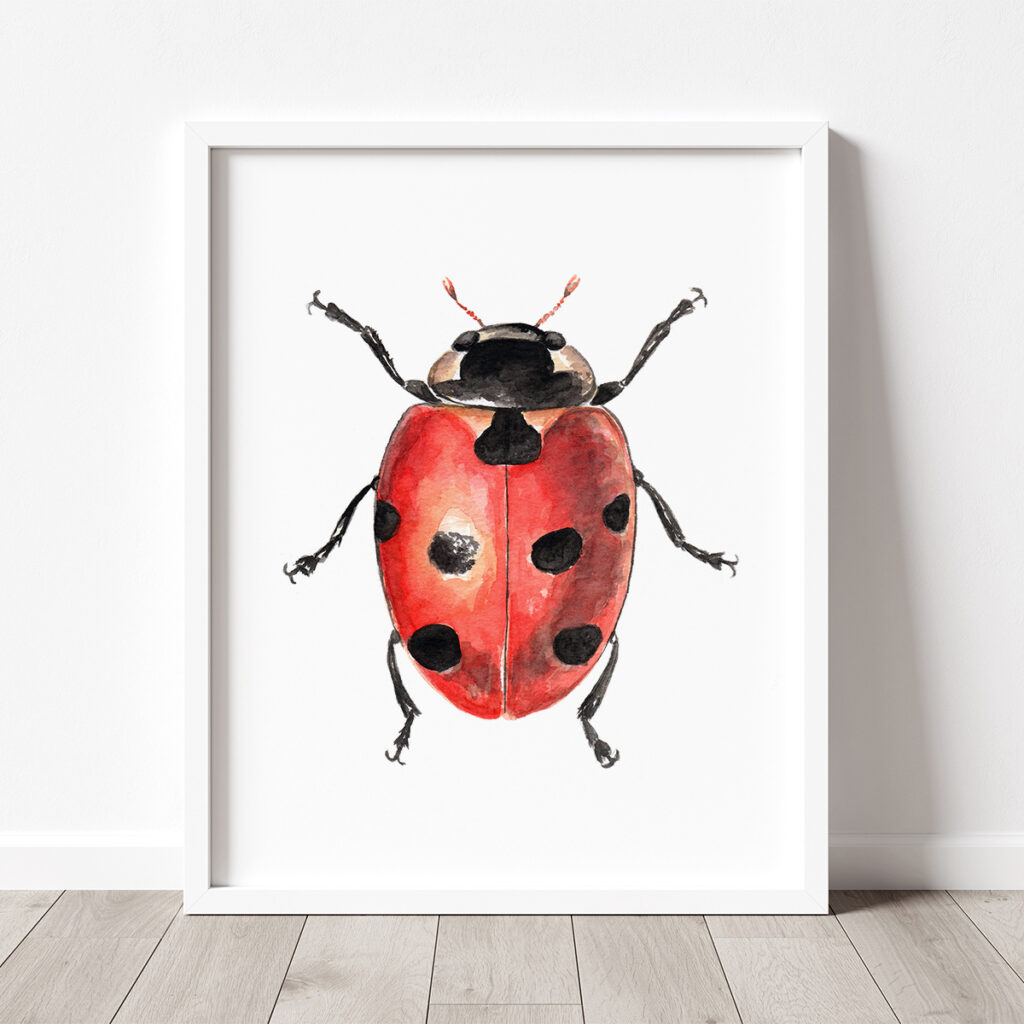
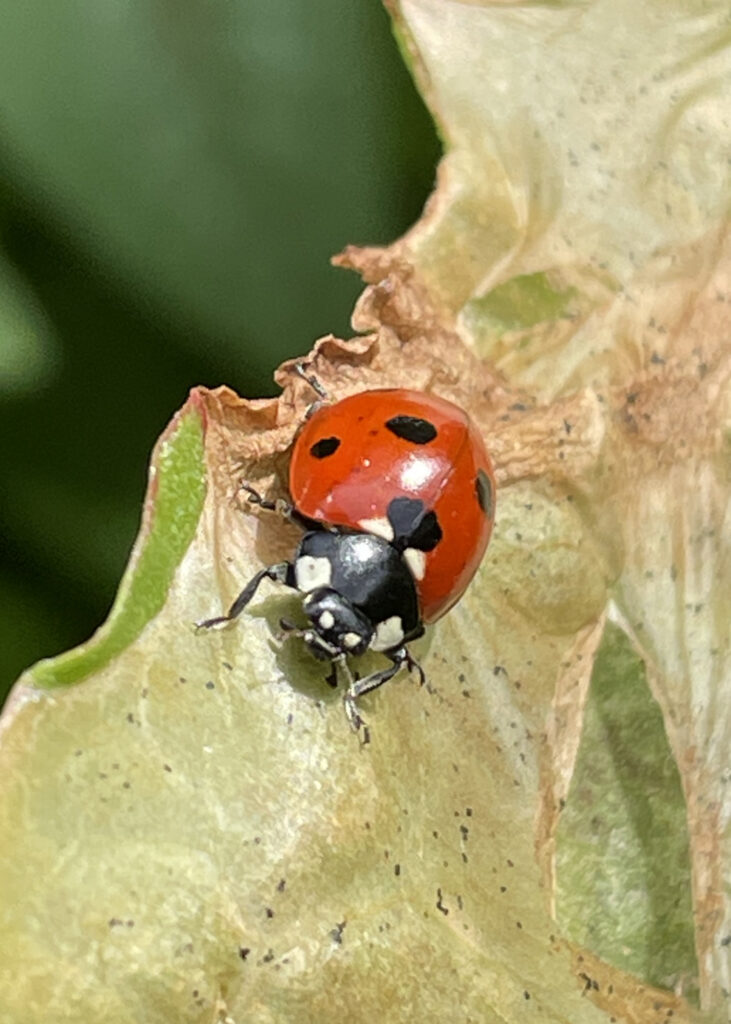
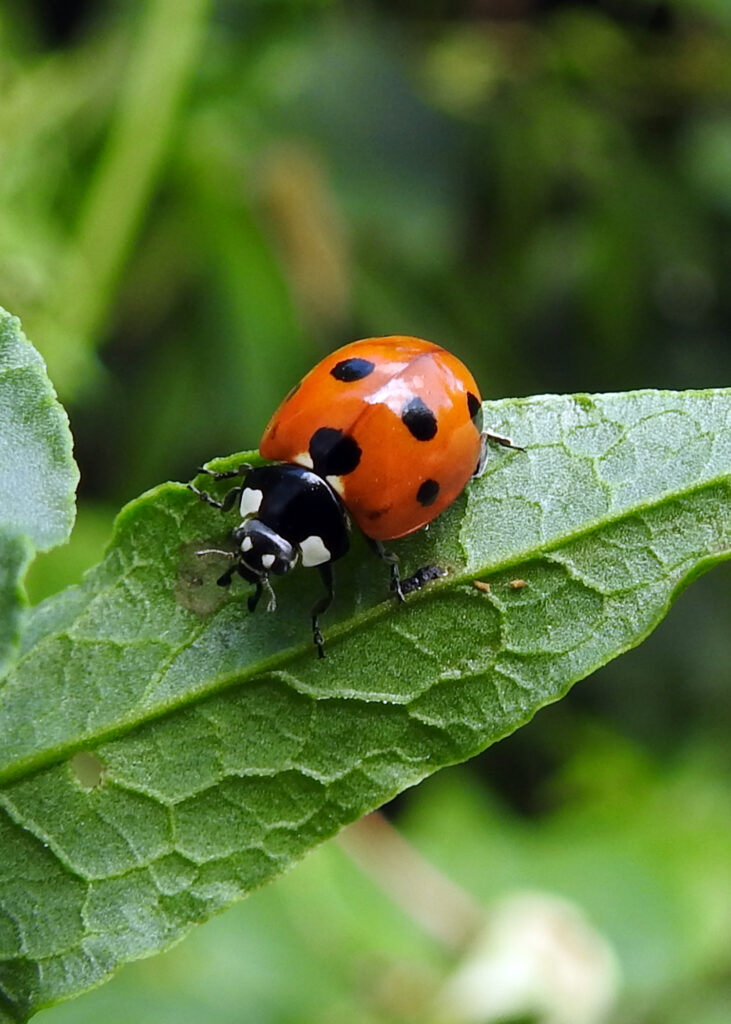
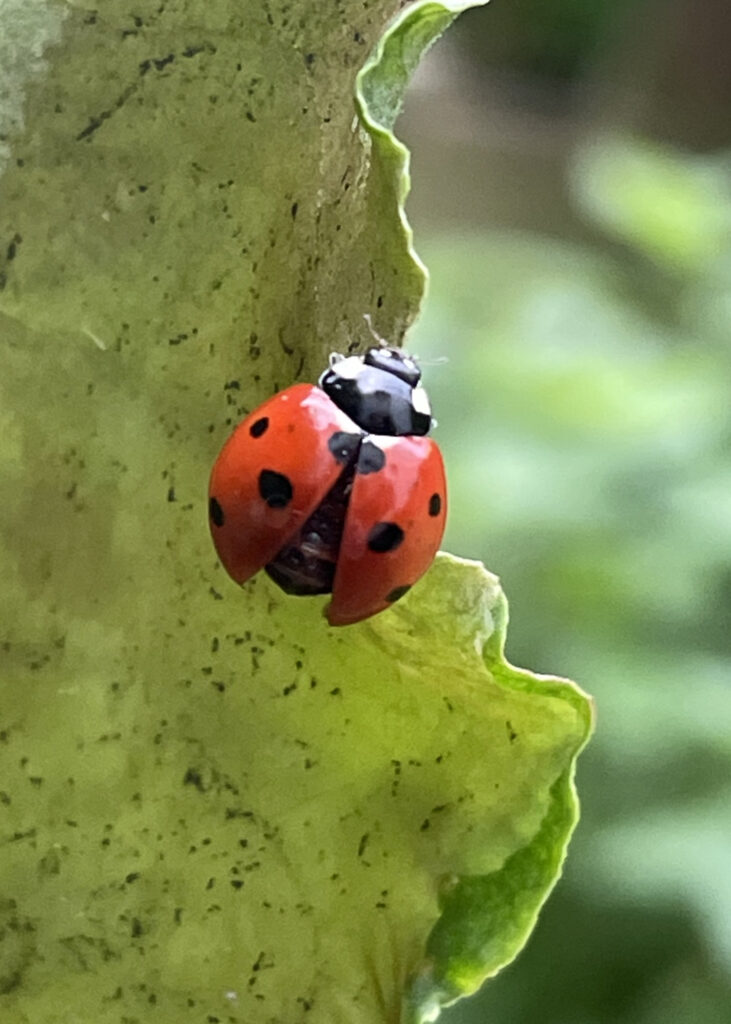
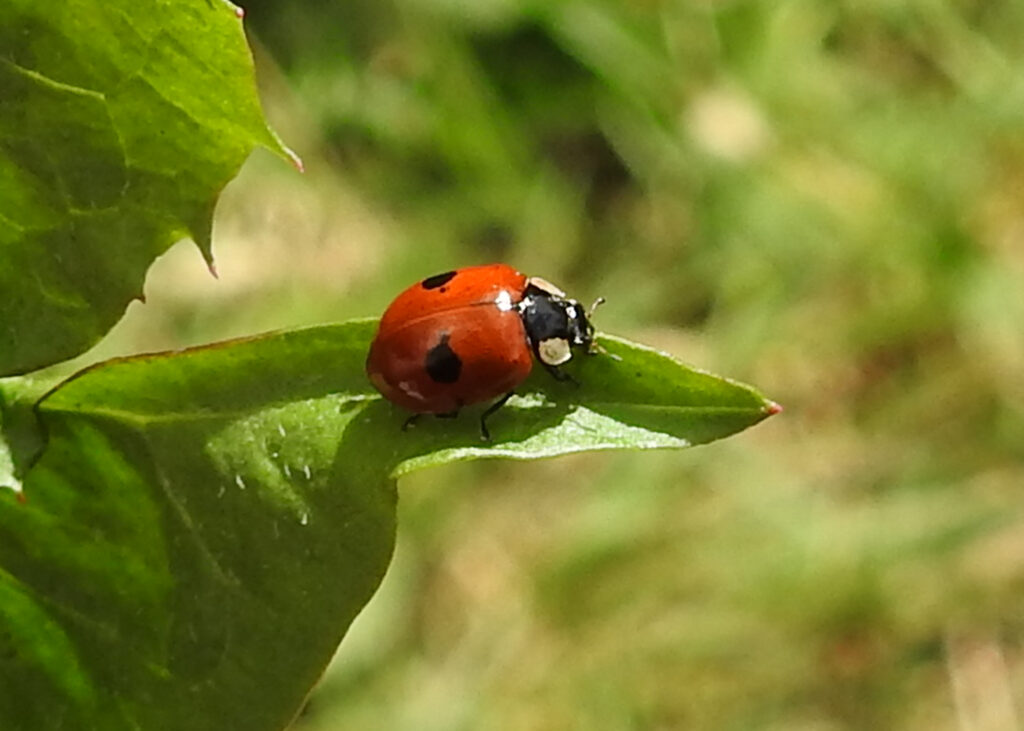
There was the familiar Seven-spot Ladybird, the species many of us picture when someone says “ladybird.”
I also found a Two-spot Ladybird, much smaller but every bit as charming.
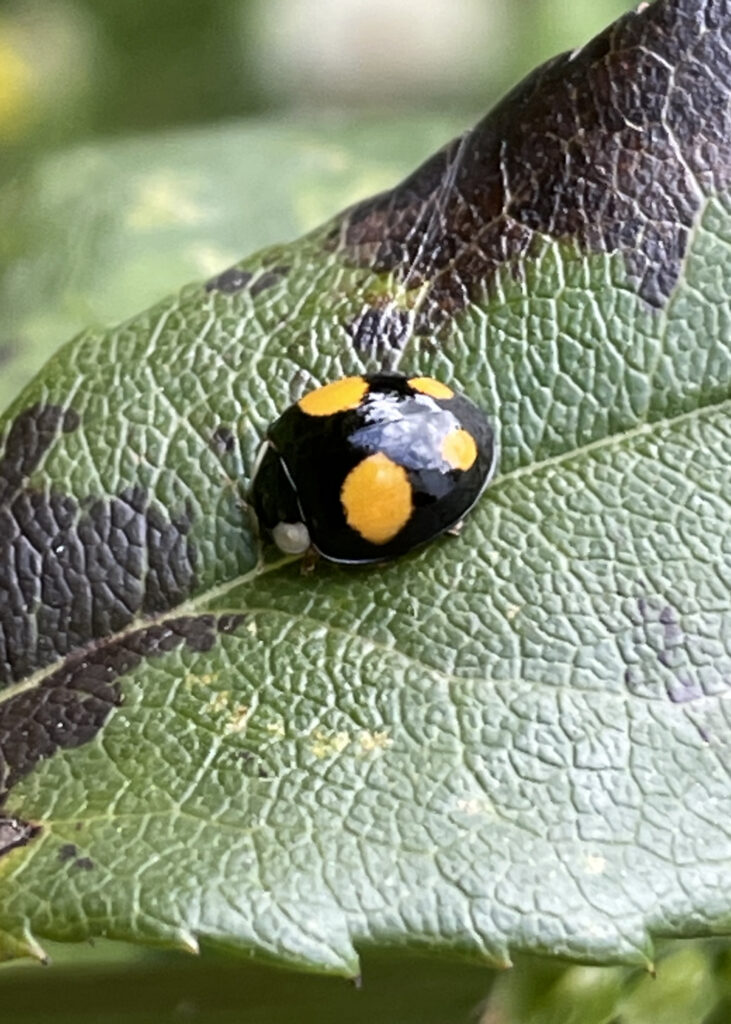
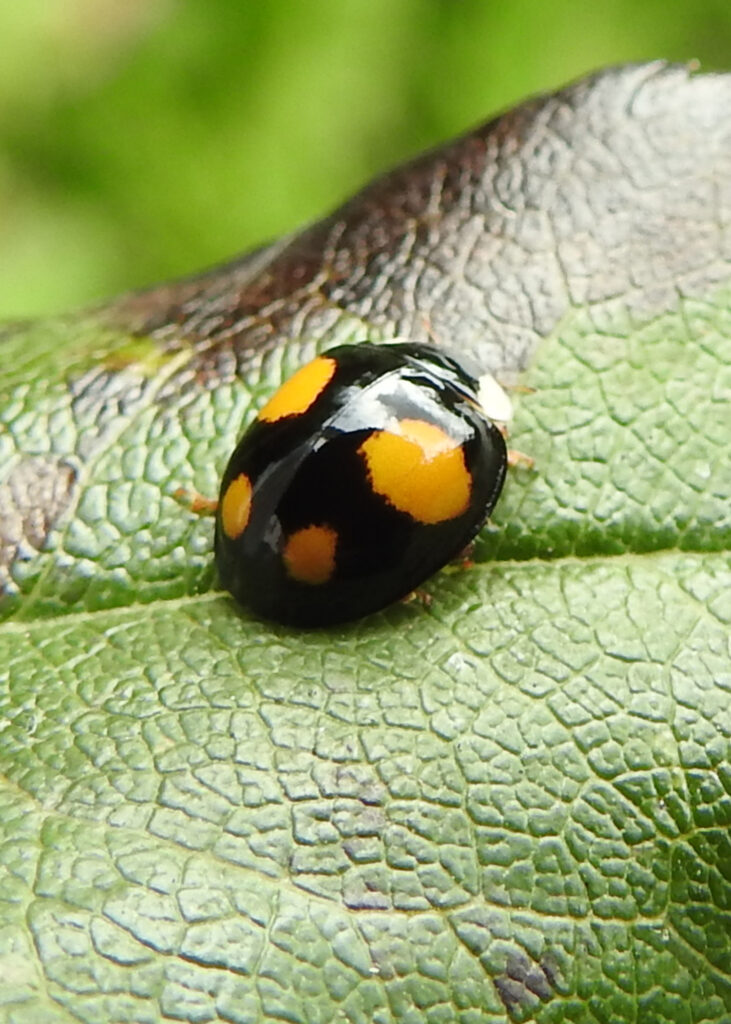
Then there was a spectacular Harlequin Ladybird wearing a glossy black coat decorated with four bright orange spots.
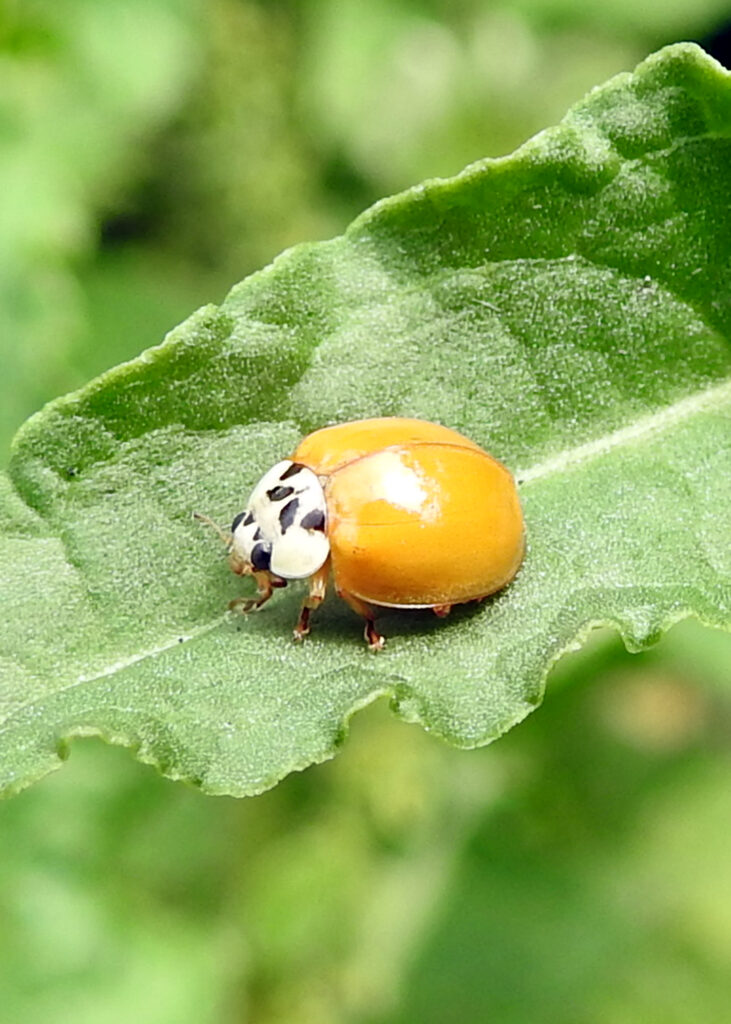
Not far away sat another Harlequin that was almost the opposite – bright orange with no visible spots at all.
And finally there was my favourite description…
The “Too-Many-To-Count-Spot” Ladybird!
Its wing cases were sprinkled with so many spots that I gave up trying to count them.
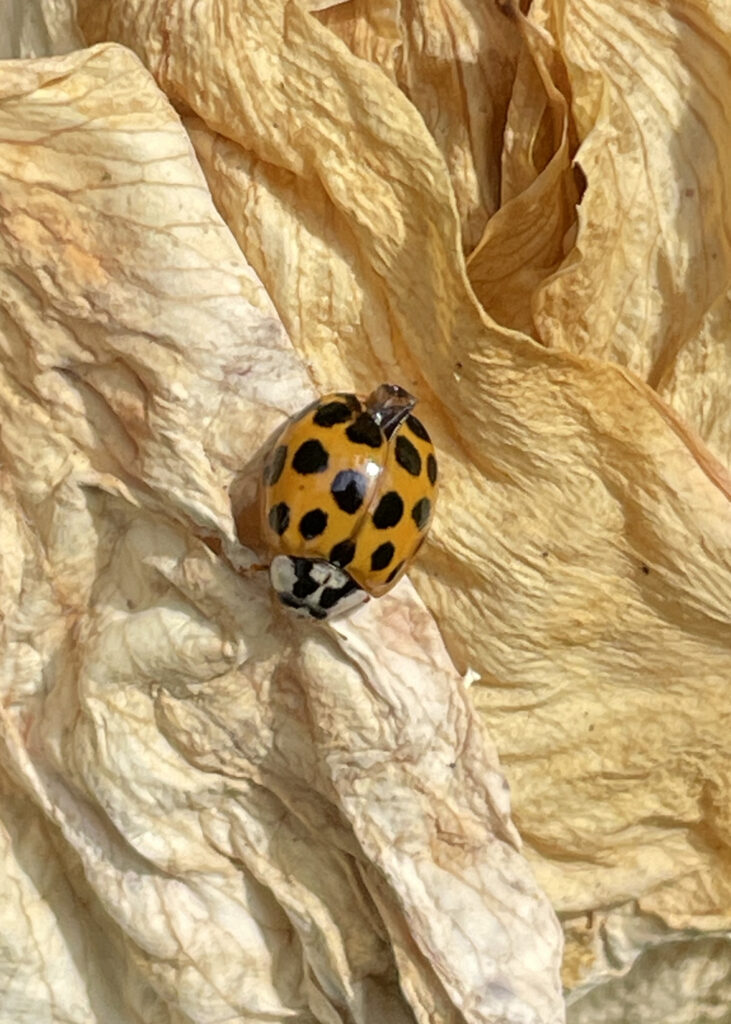
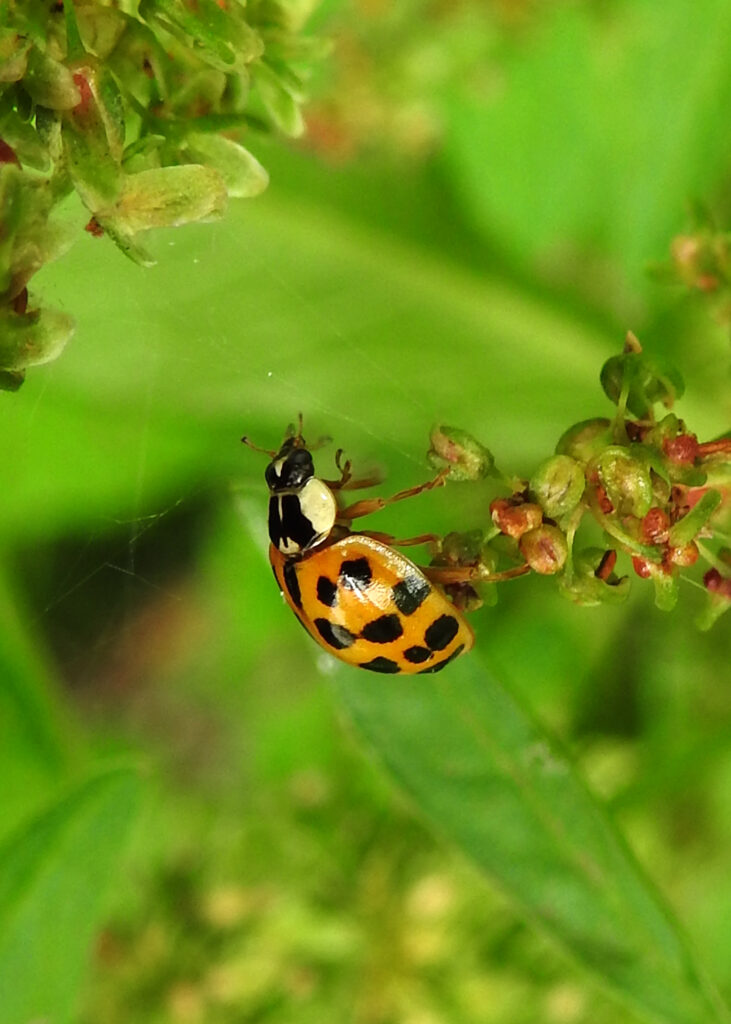
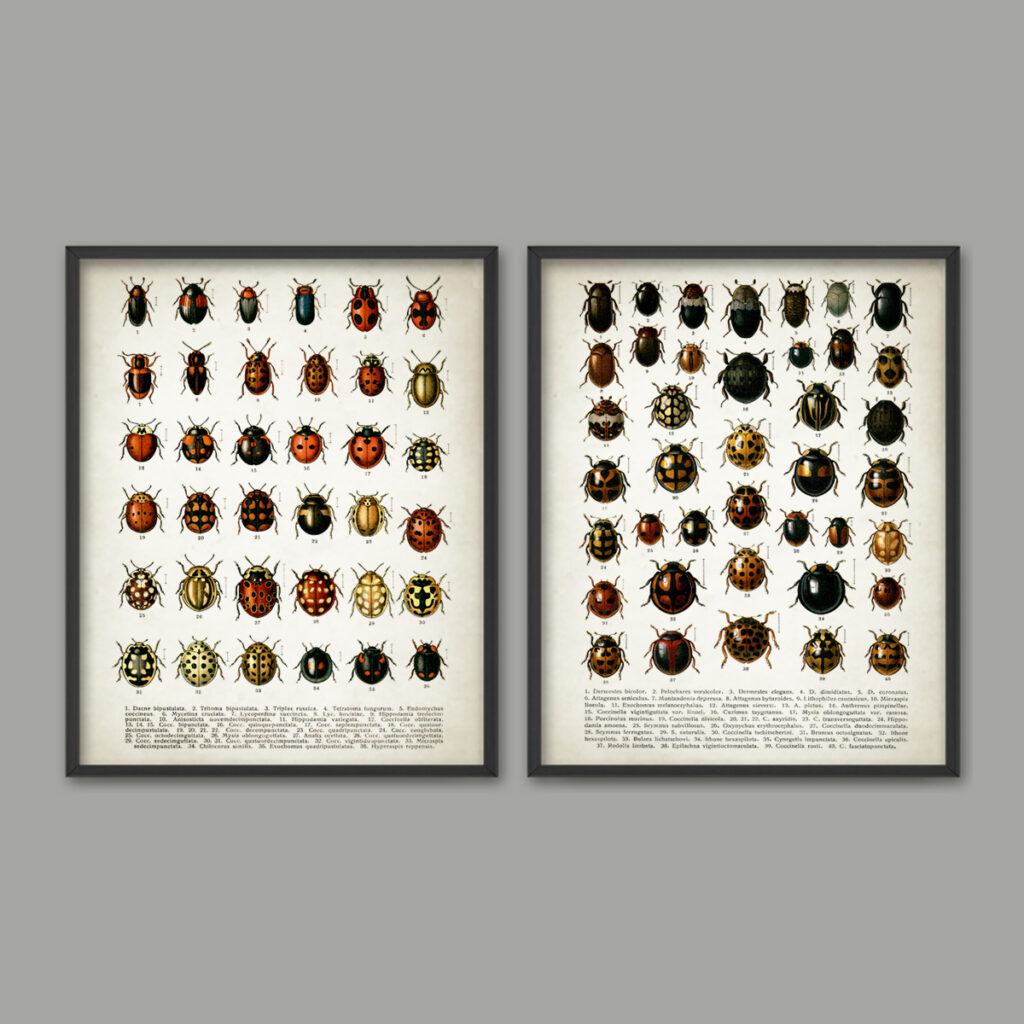
One of the wonderful things about Harlequin ladybirds is that they come in an astonishing range of colours and patterns. Some are orange, some are red, some are almost entirely black, and the number of spots can vary enormously. They all belong to the same species, making them one of the most variable ladybirds in the world.
A Tiny World Worth Stopping For
What began as a routine bit of gardening turned into an unexpected wildlife adventure. Sometimes the most extraordinary discoveries are hiding in the places we’re just about to tidy away. So next time you spot a plant covered in aphids, don’t be too quick to panic. You might just have a front-row seat at the next Ladybird Convention.